
What Handicaps and Average Scores Really Say About Golfers Today

Birdy Day Editor
advertisement
What Handicaps and Average Scores Really Say About Golfers Today
Golfers love numbers. Yardages, scores, handicaps, and averages all shape how we see our games. But when you zoom out and look at the bigger picture, the data tells a story that is both surprising and reassuring. The truth is most golfers are a lot more similar than they think.
The Average Golfer Is Better Than You Might Expect
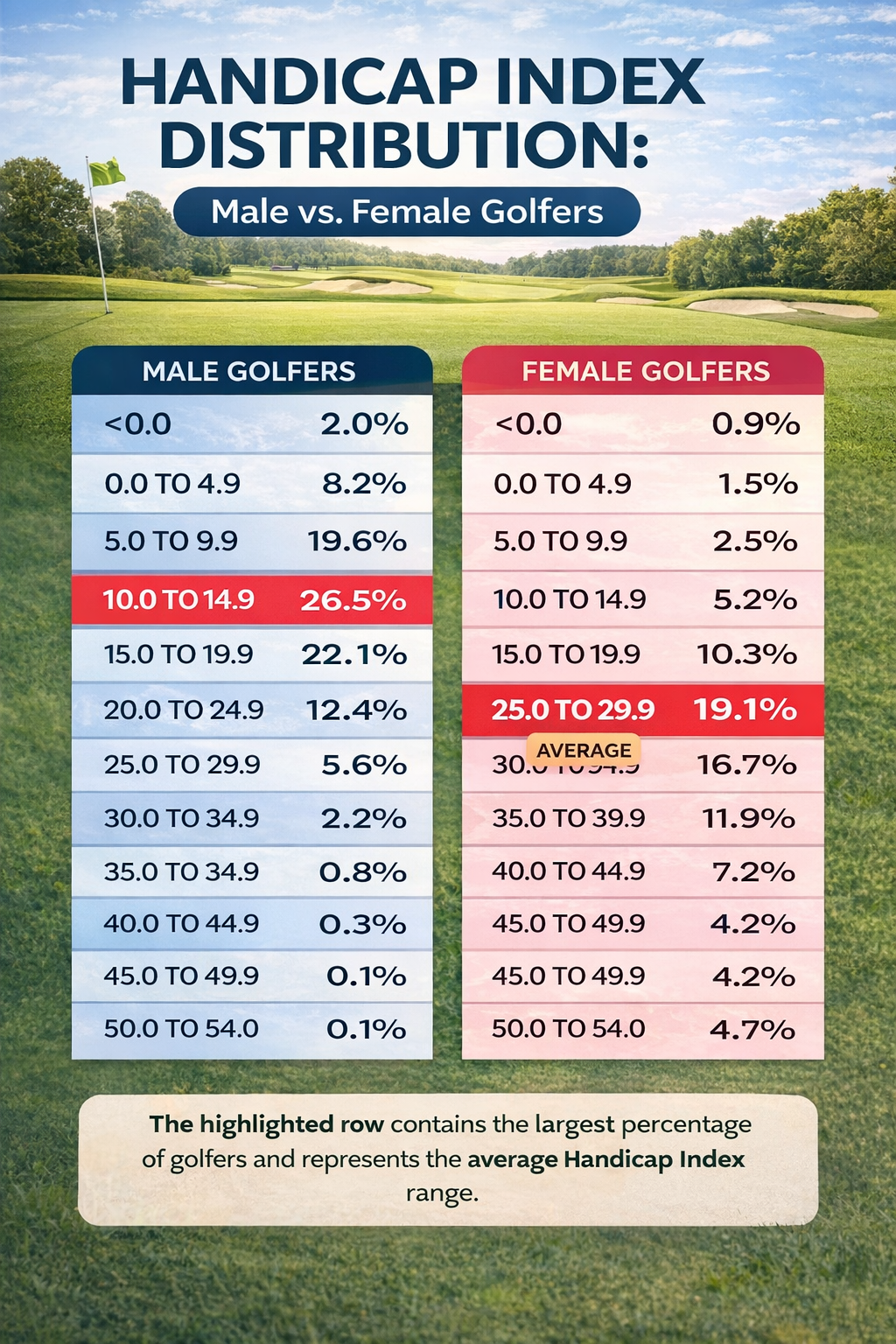
One of the biggest misconceptions in golf is that the average player struggles to keep the ball in play. In reality, most golfers who keep an official handicap fall in a much narrower range than people assume. The majority of male golfers carry handicaps in the mid to high teens. Female golfers tend to fall slightly higher, but still well within a competitive range. That means most golfers you play with are capable of solid shots, decent rounds, and the occasional great hole. Bad shots just feel louder than good ones.
Breaking 100 Is More Common Than It Feels
Breaking 100 is a major milestone for many golfers, and the data suggests more people are doing it than social media would have you believe. Once golfers establish a handicap and play regularly, breaking 100 becomes a realistic expectation rather than a rare achievement. Consistency, not perfection, is what gets players there. Most golfers who struggle to break 100 are usually one or two habits away from doing it.
Scores Are Often Inflated by a Few Holes
When golfers think about their rounds, they often remember the blow ups. The triple bogey. The water ball. The hole that ruined everything. The numbers show that most rounds are not bad from start to finish. They are undone by a handful of mistakes. A few penalty strokes or poor decisions can add ten strokes faster than any swing flaw. That is good news. It means improvement does not require rebuilding your game. It usually requires limiting damage.
Handicaps Are More About Potential Than Perfection
A handicap is not an average of your bad days. It reflects your potential on good ones. That is why golfers are often surprised when their index drops even though they still feel inconsistent. The system rewards flashes of solid play, not flawless rounds. Understanding that helps golfers stop chasing perfect golf and start playing smarter golf.
Advertisment
Short Game and Course Management Matter More Than Distance
Another trend that shows up in the data is how little distance separates most amateur golfers. What separates scores instead is what happens inside 100 yards. Golfers who manage the course well and keep the ball in play consistently outperform longer hitters who take unnecessary risks. Smart decisions show up in the scorecard even when swings are not perfect. Golf rewards patience more than power.
Most Golfers Are Harder on Themselves Than They Should Be
If there is one takeaway from handicap and scoring data, it is this. Most golfers are doing better than they think. They hit more fairways than they remember. They make more pars than they credit themselves for. They improve gradually, even when it feels slow. Golf is a game of inches and perspective matters.
Why These Numbers Are Actually Encouraging
The data shows that improvement is accessible. You do not need elite speed, perfect mechanics, or expensive gear to play better golf.
You need:
- Fewer big mistakes
- Smarter decisions
- A realistic understanding of your game
Those are things every golfer can work on.
Official score card here
advertisement
More Blogs
Birdies, Eagles & Albatrosses: A Guide to Augusta's Most Spectacular Scoring Holes


Love golf? You’ll love this. Join the Birdy Day newsletter →
Short reads, great gear, and a shot at free golf stuff. The easiest way to stay golf-smart every week.
.png)