
What the Latest LIV and PGA Tour Moves Really Mean

Birdy Day Editor
advertisement
Brooks Koepka, LIV Golf, and What Comes Next for Pro Golf
The professional golf landscape continues to shift, and recent conversations around Brooks Koepka, LIV Golf, and PGA Tour leadership have brought those changes back into focus. What once felt like a permanent divide between tours now looks far more fluid, and that uncertainty is shaping the future of the sport.
At the center of the discussion is Brooks Koepka, whose name continues to surface whenever conversations turn to player movement, competitive balance, and the long term direction of professional golf.
Why Koepka Still Drives the Conversation
Koepka represents more than individual success. He represents leverage. As a major champion who has competed at the highest level across different tours, his decisions carry weight far beyond a single leaderboard.
Any discussion involving Koepka forces the sport to confront uncomfortable but necessary questions. What does loyalty mean in modern professional golf. How much flexibility should exist for elite players. And who ultimately controls access to the biggest stages.
Leadership Changes Are Shaping the PGA Tour’s Direction
Much of the current momentum stems from leadership decisions made by Brian Rolapp. Since stepping into a more prominent role with the PGA Tour, Rolapp has signaled a willingness to rethink how the Tour operates in a post-LIV world.
Rather than focusing exclusively on separation, the conversation has shifted toward structure, pathways, and long term competitiveness. That does not mean the Tour is softening its stance. It means the Tour is adapting to a reality where elite talent has more options than ever before.
LIV Golf Is Still a Factor
Despite ongoing speculation, LIV Golf remains a meaningful presence in professional golf. Its team format, guaranteed contracts, and alternative presentation continue to influence how the sport is discussed, even among those who prefer traditional structures.
LIV’s impact is no longer limited to disruption. It has forced conversations around compensation, scheduling, and fan engagement that were previously avoided.
Players Are Watching Closely
What happens next matters to more than just fans. Players across all tours are paying attention. They are evaluating how movement is handled, how leadership responds, and what options exist if career circumstances change.
That level of attention suggests the next few seasons could define a new era where professional golf operates with more flexibility, but also more scrutiny.
Advertisment
What This Means for Fans
For fans, the takeaway is simple. The competitive landscape is evolving. Traditional boundaries are less rigid, and conversations about the future of the sport are happening in real time.
Whether you follow one tour or several, the product on the course continues to be shaped by decisions happening off it.
advertisement
More Blogs
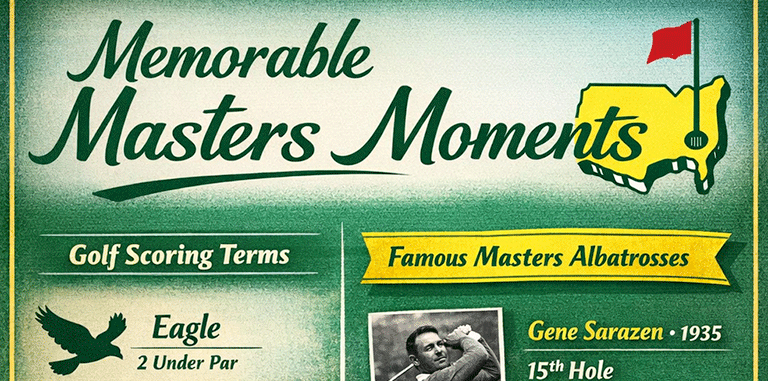
Birdies, Eagles & Albatrosses: A Guide to Augusta's Most Spectacular Scoring Holes

Love golf? You’ll love this. Join the Birdy Day newsletter →
Short reads, great gear, and a shot at free golf stuff. The easiest way to stay golf-smart every week.
.png)